How to Handle Deposit Disputes as a Landlord in Birmingham
The adjudicator never sees your property. They read what you send in, and nothing else. And they start from the position that the money belongs to your tenant.
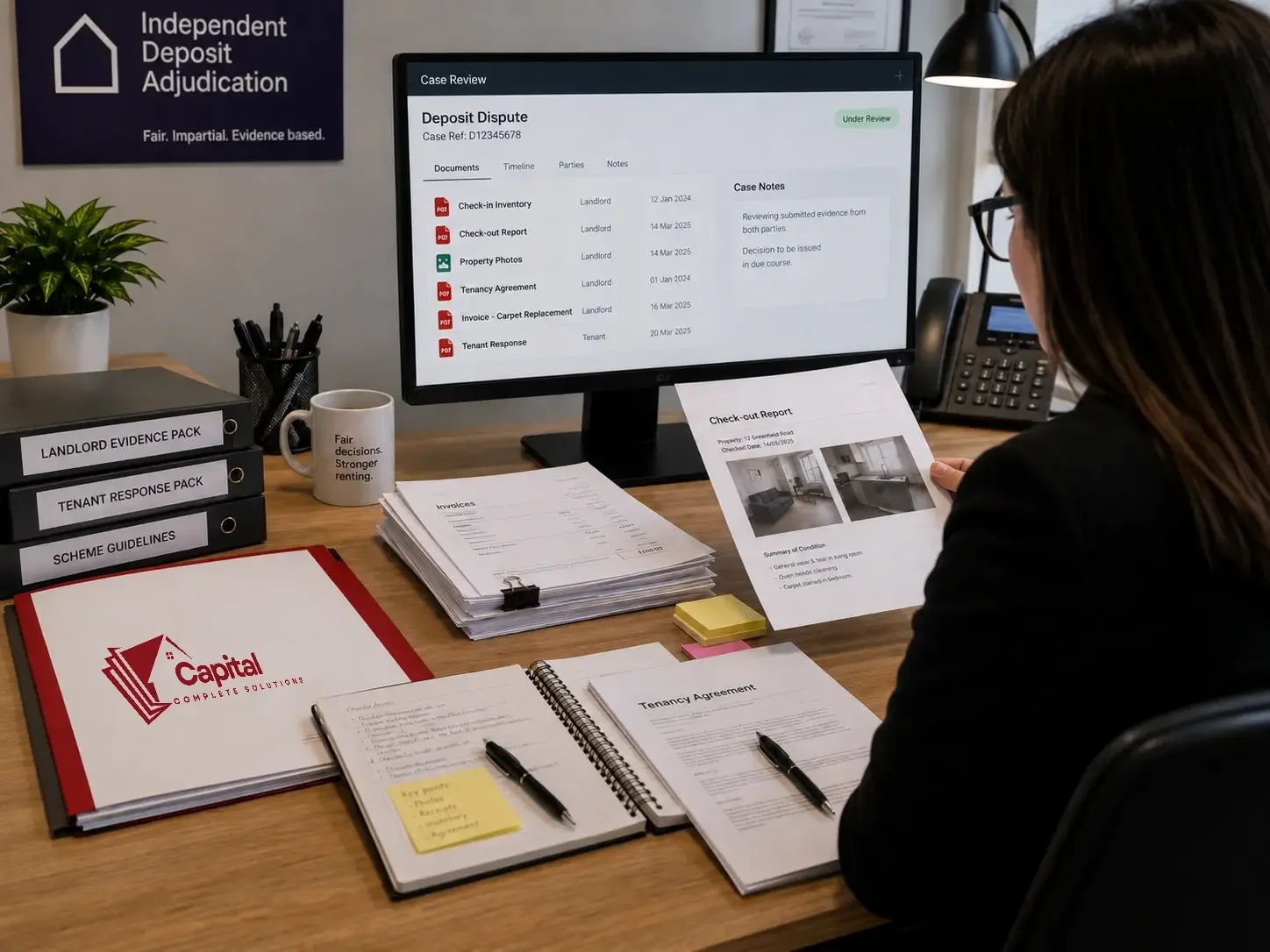
Most landlords learn that the hard way. You know the tenant wrecked the carpet. You know the kitchen was spotless when they moved in. None of that matters if you cannot show it.
So handling a deposit dispute as a landlord in Birmingham is not an argument. It is a paperwork job. Win it on paper and you win. Turn up with a handful of phone photos and you will lose money you were genuinely owed.
Here is how the whole thing actually works.
Who decides a deposit dispute, and do they ever see the property?
An independent adjudicator appointed by your deposit scheme decides it. They never visit the property. They never ring you, and they never ring your tenant.
They read both evidence packs. Then they decide.
That is the whole game. The adjudicator cannot see the scorch mark on the worktop. They cannot smell the carpet. If it is not in your pack, it did not happen.
All three approved schemes run this service. TDS, DPS and MyDeposits. It is called alternative dispute resolution, or ADR. It is free to both sides. The decision is binding, and there is no internal appeal.
You get one go at it.
The deposit is your tenant's money until you prove otherwise
This is the bit that catches people out. The Tenancy Deposit Scheme says it plainly: "The burden of proof will always lie with the landlord."
The deposit belongs to the tenant. You just hold it. To keep any of it, you have to show four things.
- You lost out. Something is damaged, dirty, missing or unpaid.
- Your tenant caused it. Not the last tenant. Not the weather. Not old age.
- The tenancy agreement lets you claim it from the deposit. No clause, no claim.
- You can put a real number on it. Evidenced. Not a guess. Miss one and the claim fails. It does not matter how unfair that feels standing in the property.
Adjudicators decide on the balance of probabilities. Your version just has to be more likely than theirs. Evidence is what tips it.
Which scheme are you in? It changes what happens next
There are two types, and landlords mix them up constantly.
Custodial. The scheme holds the money during the tenancy. It is free. At the end, nothing moves without the scheme. If you disagree, the whole deposit goes into the dispute process.
Insured. You hold the money and pay the scheme a small premium. You can settle directly with your tenant and return the balance yourself, no scheme involved. Only the contested amount goes over if it goes to dispute.
Both run free ADR. Both decisions are binding. But the deadlines differ, so check your own scheme's rules before you assume anything.
How the dispute process works, step by step
Broadly the same across all three schemes.
- The tenancy ends and you inspect. Ideally a formal check-out inspection on the last day.
- You propose deductions in writing. Itemised, with costs. Not one lump sum.
- Your tenant replies. They accept some, argue others.
- You try to agree. The schemes expect a real attempt. Most disputes should end right here.
- Either side asks for dispute resolution. Free.
- Both sides send evidence. DPS gives you 14 calendar days from the date of their email. MyDeposits gives a responding landlord 20 working days, with the disputed amount lodged inside the first 10.
- The adjudicator decides. On paper.
- The scheme pays out. The undisputed part is usually released early. Only the contested amount sits locked up.
How long do you have, and how long does it take?
Months, not weeks. But the exact deadline depends on your scheme. MyDeposits allows a dispute up to three calendar months minus one day from the day the tenant moved out. Check yours.
On timings, DPS estimates about 44 days from the point a claim formally enters dispute to payment. They aim to resolve most cases within 15 days of the adjudicator picking it up.
Four to six weeks is fair. Longer if either side sends in a mess.
One more deadline worth knowing. Once you and your tenant agree the figures, the deposit has to go back within 10 days.
What evidence do you need to win a deposit dispute?
You need a dated, room by room story of the property. Move in day to move out day. Nothing missing in between.
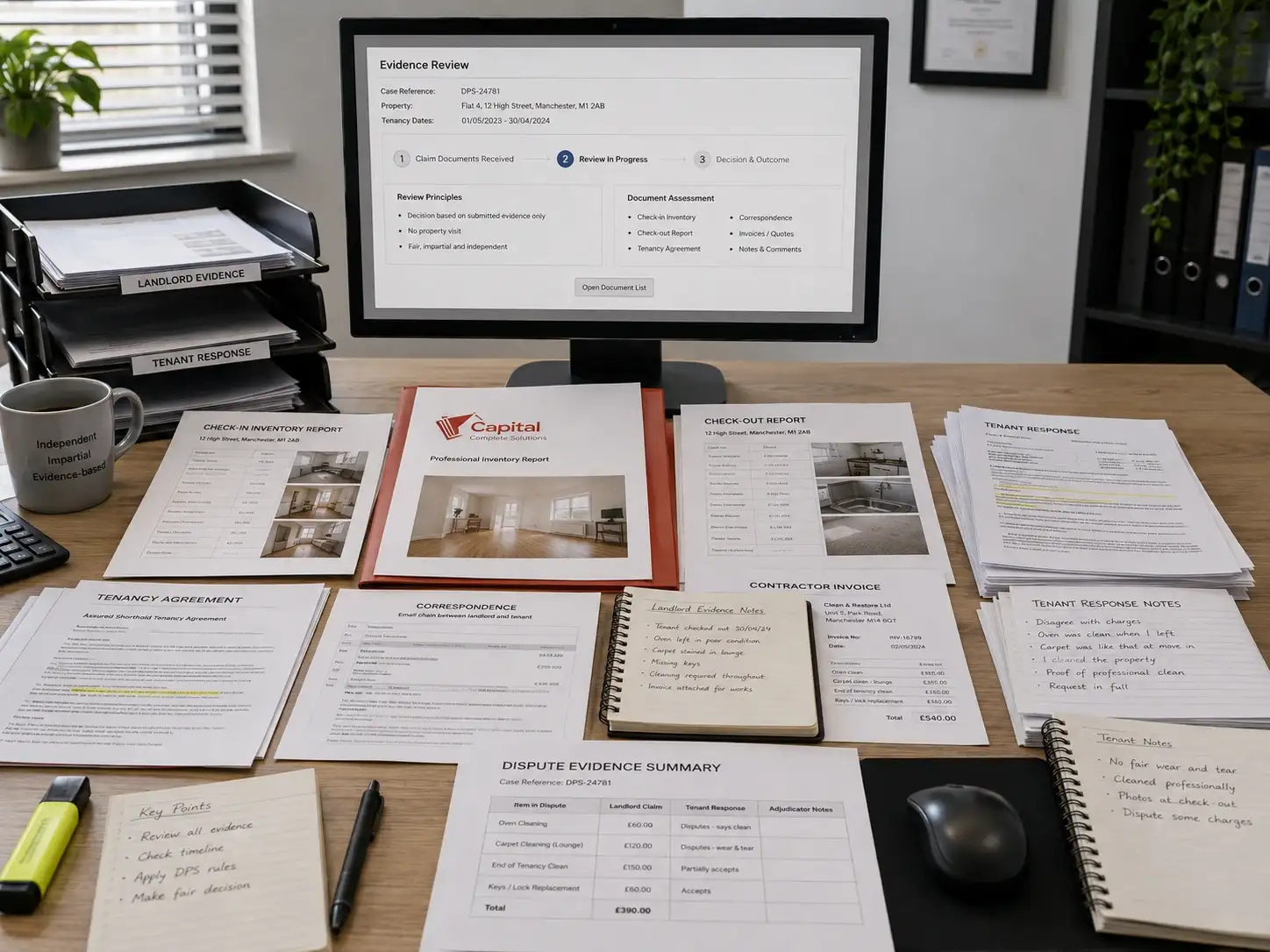
Here is the pack that works.
- The signed tenancy agreement, with the clause highlighted. This is what gives you the right to deduct at all.
- A signed check-in inventory report with photographs. Your baseline. Without it you have nothing to compare against.
- A check-out report written against that same inventory, line by line.
- Dated, well lit photographs from both ends. Same rooms, same angles. Make the comparison obvious.
- Invoices, quotes or estimates. Real figures from real contractors.
- The written trail. Emails, texts, any routine inspection reports from during the tenancy.
- For arrears, a rent statement and the tenancy clause. Nobody takes your word for the balance. Adjudicators test it on four things. Is it consistent? Is it credible? Is anything missing? Is it relevant to what is actually in dispute?
Then present it properly. Room by room. Photographs labelled to match the report. Forty unnamed phone pictures in a folder helps nobody, least of all you.
Fair wear and tear, or damage?
This is the line every dispute is argued on. Get it wrong and your dilapidations claim collapses.
Fair wear and tear is the deterioration you would expect from normal living, over that length of tenancy. You cannot charge for it. Damage is anything beyond that, caused by your tenant or their neglect. You can.
In practice:
- Faded paintwork after two years is wear and tear. Crayon up the wall is damage.
- Flattened hallway carpet is wear and tear. A cigarette burn or a deep set stain is damage.
- Light scuffs on skirting are wear and tear. A door kicked through is damage. Length of tenancy matters too. Six years of wear on a carpet is not the same as six months.
What betterment means, and why it cuts your claim
Betterment is where solid claims get trimmed right down.
TDS is blunt about it. Adjudicators will not allow betterment. You cannot come out of a dispute better off than you were before the damage.
So if your tenant ruins a carpet that was already five years into a ten year life, you are not getting a new carpet. You get the residual value. Half of it, roughly.
Same for redecoration, white goods and furniture. I would rather tell you now than let you find out in a decision letter.
Why do landlords lose disputes they should have won?
Nine times out of ten it is one of these. Every one is avoidable.
- No check-in inventory. Or one with no photos and no tenant signature. This is the big one.
- Dark, blurry, undated photos. They could be from anywhere, any time.
- Claims that do not match the invoices. You claim cleaning, the invoice says repairs. That gets noticed.
- Verbal agreements with nothing in writing.
- Full replacement cost for something already half worn out.
- A check-out done a week later. Your tenant will argue it proves nothing about the day they handed the keys back. They have a point.
- Over-claiming. Throw in every possible deduction and you damage your credibility on the ones that were real. Cleaning tops the list every year. TDS data for the year to March 2025 puts cleaning in 54 per cent of disputes. Damage 49 per cent. Redecoration 31 per cent. Gardening 14 per cent. Rent arrears 10 per cent.
And it is nearly always the same story. Nobody agreed what clean looked like at the start.
Can you claim anything without a check-in inventory?
You can try. You will usually lose.
No inventory means no agreed baseline. The adjudicator has no idea what condition the property was in when your tenant took it on. They cannot award for damage that was never recorded at the start.
This is not a technicality. It is the single biggest reason landlords lose deposit money they were owed.
One more thing, and I will be blunt. An inventory you wrote yourself, unsigned, carries far less weight than an independent one prepared by a third party clerk. Adjudicators weigh credibility. Impartiality is part of that.
That is the difference between a check-in and check-out done properly and a set of holiday snaps.
What a deposit dispute looks like for a landlord in Birmingham
Birmingham makes this sharper than most places.
Student turnover around Selly Oak and Edgbaston squeezes hundreds of check-outs into a few weeks each summer. Rushed check-outs are weak check-outs. City centre blocks turn over all year. And a large part of the city sits under selective licensing, with additional HMO licensing running citywide. Compliance is already under the microscope here.
Then there is the deposit protection side, which sits underneath every dispute.
Protect the deposit in an approved scheme within 30 days of getting it. Serve the prescribed information in the same window. Get that wrong and you lose access to free ADR. Worse, a court can order you to repay the deposit plus compensation of up to three times its value.
While you are checking, the Tenant Fees Act 2019 caps what you can hold. Five weeks' rent if the annual rent is under £50,000. Six weeks at £50,000 or more. A holding deposit cannot be more than one week's rent.
Since 1 May 2026 the Renters' Rights Act has turned assured shorthold tenancies into assured periodic tenancies and scrapped Section 21. Adjudication itself has not changed. But more tenancies now end on the tenant's notice, at less predictable times of year. Which makes a clerk who can turn a check-out around quickly a lot more useful than it used to be.
This article is general guidance for landlords and letting agents, not legal advice. For your specific duties, check current GOV.UK guidance or speak to a qualified professional.
How to make sure you never end up here again
Deposit disputes are won months before they start.
Only around one per cent of protected deposits reach formal adjudication. So most landlords never see one. The ones who do are nearly always the ones who cut corners on day one.
Before your next tenant moves in, do four things.
- Get a proper inventory and schedule of condition. Photographed, dated, room by room.
- Get it signed. A check-in inspection where your tenant walks the property and signs the report is worth more than any argument you will ever make later.
- Inspect during the tenancy. Dated records catch problems while they are still cheap.
- Book the check-out for the day the tenancy ends. Not the following week. Do those four and most disputes never happen. The ones that do, you win.
Want a report that holds up when it gets tested?
That is exactly what we do. Independent, AIIC accredited, photo evidenced inventories and check-outs, across Birmingham and the wider West Midlands. No baseline, no claim. So get the baseline right.
- AIIC-accredited
- Same-day cover
FAQs
Can a tenant dispute a deduction after they have moved out?
Yes. That is normally when it happens. The window depends on your scheme. With MyDeposits a dispute can be raised up to three calendar months minus one day from the day the tenant moved out.
How long does a landlord have to return the deposit?
Once you and your tenant have agreed the figures, the deposit must go back within 10 days.
Do photographs have to be dated to count?
Not strictly. But undated photos are weak. An adjudicator cannot place them in time. Clear, well lit, dated images from the same angles at check-in and check-out are what wins claims.
Can I charge for a professional clean if the tenancy agreement says so?
You cannot make professional cleaning a blanket condition. You can claim for the property coming back less clean than it was at check-in, evidenced against the inventory, for a real and proportionate cost.
Is the adjudicator's decision final?
Yes. Binding, no internal appeal. Which is why your evidence pack matters so much.
Can I go to the small claims court instead?
It is an option. Mainly where one side refuses the free scheme service, where the deposit was never protected, or where the claim goes beyond the deposit itself. It costs money and takes longer. ADR is free. Take advice before choosing court.
Who pays for the adjudication?
Nobody. It is free to both landlord and tenant.
Does the tenant have to sign the inventory for it to count?
It carries far more weight signed. An unsigned inventory can still be looked at. But a tenant who never agreed it can argue with what it says, and usually does.
Can I claim for the garden?
Yes, if the tenancy agreement makes the garden your tenant's job and you can show its condition at both ends. Gardening shows up in around 14 per cent of disputes. It fails for the same reason everything else fails. No baseline.
What happens to the part of the deposit nobody is arguing about?
The undisputed amount is usually released while the contested part stays protected until the adjudicator decides.
Written by
Founder, Capital Complete Solutions. AIIC-accredited inventory specialist, Birmingham.