Legionella Risk Assessments in Birmingham, Compliance Sorted

Legionella Risk Assessments in Birmingham, Compliance Sorted

A Legionella risk assessment is a legal duty for every landlord, not an optional extra. We carry yours out across Birmingham and the West Midlands, AIIC-accredited and fully insured, and we hand you clear proof the job was done properly.

AIIC Accredited

AIIC
Accredited

Let's start with what you're actually protecting against

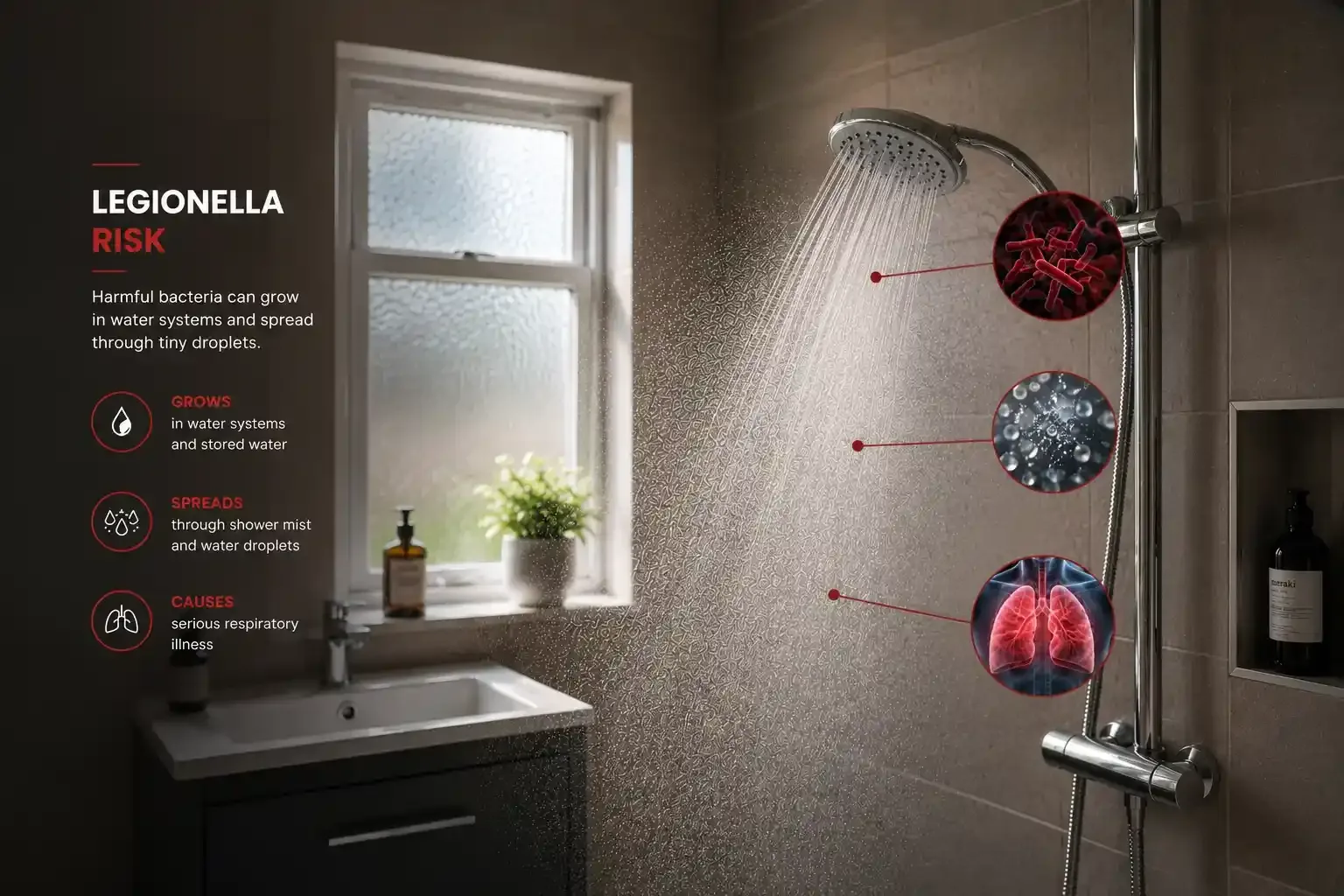
Legionnaires' disease is a serious form of pneumonia. It can be fatal. You catch it by breathing in tiny droplets of contaminated water, the kind a shower or a spray tap throws into the air without you noticing. The bug behind it, Legionella, can grow in any hot or cold water system. It likes still water, stored water, and water sitting at the wrong temperature. Roughly 20°C to 45°C is its comfort zone. Older tenants, anyone with a lung condition, anyone with a weak immune system: those are the people most at risk. That's the whole reason this law exists. And that's why it lands on you, the landlord, not the tenant.

Let's start with what you're actually protecting against

It's a legal duty. Most landlords don't realise how exposed they are

If you let a property, you have a legal duty under the Health and Safety at Work Act 1974 and COSHH 2002 to assess and control the risk of Legionella in the water system. The HSE's Approved Code of Practice, ACoP L8, and its technical guidance, HSG274, spell out how. They aren't law on their own. But a court treats following them as proof you did your job, and treats ignoring them as something you'll have to explain.

That duty sits with you as the person in control of the property. If a managing agent runs it, the responsibility can sit with them instead. Either way, a competent person has to own it.

Now, in my experience, nine times out of ten the risk in a normal domestic let is low. Water gets used, it turns over, and Legionella never gets a foothold. But low risk is not the same as no duty.

Picture the worst case. A tenant catches Legionnaires' from the water in your property. You're now standing in front of a court being asked to prove you assessed and controlled the risk. No assessment, no proof. That's the gap that catches good landlords out.

And it isn't small money. One housing provider was fined £900,000 after vulnerable residents were exposed to contaminated water. That's the extreme end, granted. But the duty behind it is exactly the same whether you've got one flat in Stechford or fifty across the West Midlands.

Want the plain-English version of who needs one and why? Read the landlord Legionella duty explained.

What you actually get in your Legionella risk assessment

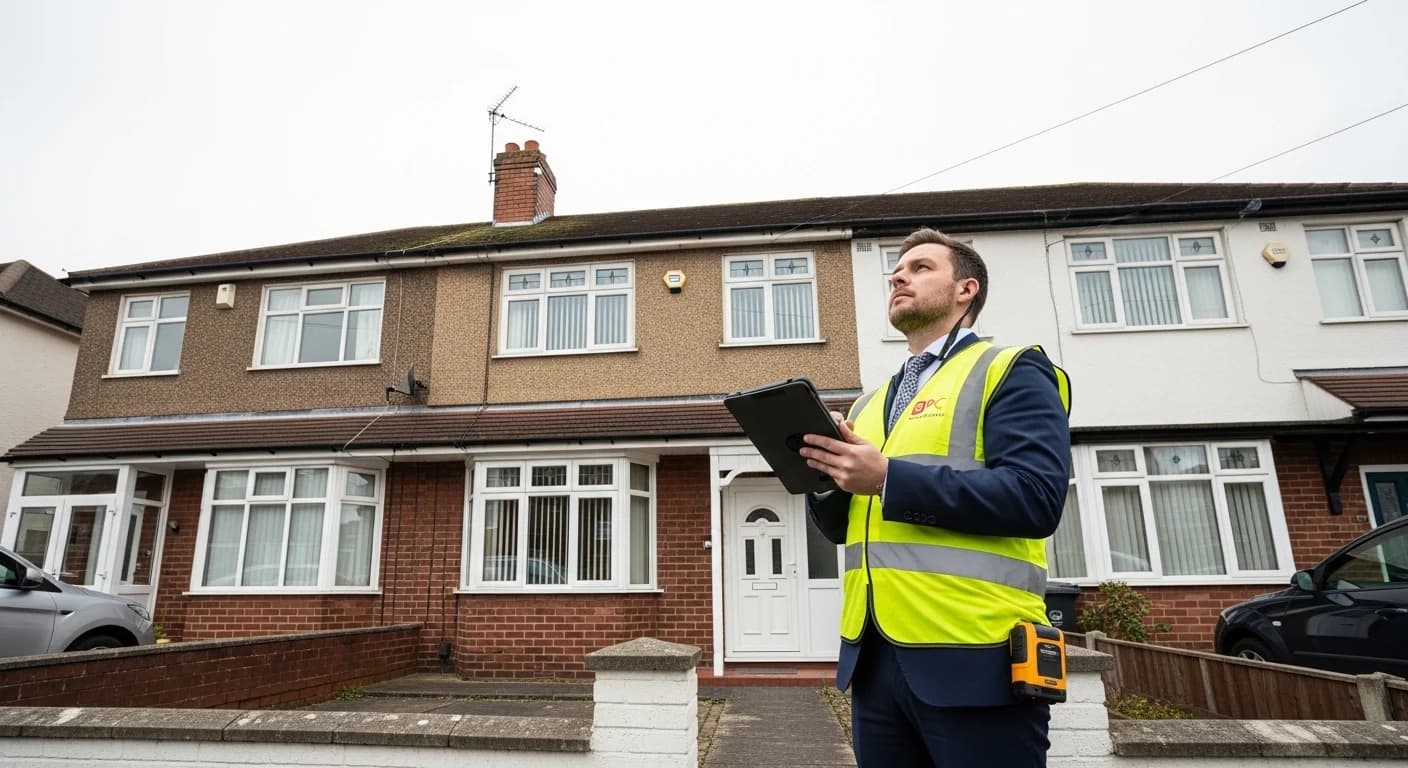
A proper landlord Legionella risk assessment is a survey of the property's water system, plus a written record of what we found and what to do about it.

Here's what's covered:

  • The full system, mapped room by room. Hot and cold, nothing skipped.
  • Temperatures checked at the outlets. Cold running below 20°C, hot stored around 60°C and coming out above 50°C. That temperature gap is what holds the bacteria back.
  • Stagnant spots flagged. Dead legs, redundant pipework and little-used outlets, the places water sits still and trouble builds.
  • Tanks and equipment checked. Cold water storage tanks, lids, condition.
  • Showerheads and spray taps assessed. These are the parts most likely to throw droplets into the air, so they matter most.
  • A written report with a clear action plan, risks in priority order, and a record you can hand over the day anyone asks.
  • Simple guidance for your tenant on keeping things safe.

That written record is the bit people underrate. It's evidence. It's the document that says you took this seriously, sitting on file ready for an insurer, an adjudicator or a court. There's no legal rule on how long to keep it, but the sensible move is a rolling file for each property.

Our Process

Works

Book Your Property Inspection in Five Simple Steps

01

Get in Touch

Call us on 0121 582 4070, email info@capital-cs.com, or message us on WhatsApp to discuss your requirements or set up an account.

02

Book an Inspection

Choose the service you need and confirm a date and time. We'll take care of the rest.

03

We Attend the Property

Our AIIC-accredited inspector arrives on time and carries out a thorough, systematic inspection with photographic documentation throughout.

04

Receive Your Report

Your detailed digital report is delivered promptly. Clear, professional, and ready to share with landlords or tenants straight away.

05

Ongoing Support

Have a question about a report or a deposit dispute? We're always available by phone, email, or WhatsApp to help.

What keeps the risk down between visits

The assessment is the start, not the whole job. The good news is that most of what keeps a domestic system safe is simple. Here's the short version worth knowing:

  • Keep hot water hot and cold water cold. That one habit controls most of the risk.
  • Flush little-used taps and showers through, the ones that don't get daily use.
  • Clean and descale showerheads now and then.
  • Check the cold water tank lid is on and secure.
  • Mind your voids. An empty property is exactly when water goes stagnant. If you only do one thing between tenancies, do this: run all the water through properly before the next tenant gets the keys.

Why landlords and agents get us to do it

We're AIIC-accredited and fully insured, and our assessments are independent. That independence is the whole point. An impartial report, documented properly and written in line with HSE guidance, is the thing that actually stands up when it's questioned.

We're also straight with you. We won't push water sampling, a monitoring contract, or testing your property doesn't need, because most domestic systems don't need any of it. You get an honest assessment, the right controls, and proof on record.

And if you're a portfolio landlord or an agent, that's one provider handling Legionella across every property, to one standard, with one number to call.

Why landlords and agents get us to do it

Where a proper assessment really earns its keep

Some properties carry more risk than others. These are the ones where bringing us in pays for itself:

  • HMOs and student lets. More outlets, more occupants, more chances for something to slip through.
  • Properties that sit empty between tenants. A void is prime time for water to stagnate, so it's worth pairing the assessment with your routine inspection between tenancies.
  • Older systems with tanks and stored water, rather than a simple mains-fed combi.
  • Vulnerable tenants, who'd be hit hardest if exposure ever happened.
  • Mixed and small commercial lets. A shop with a flat above, a small unit: same duty applies. For genuinely large or complex systems, cooling towers and the like, that's specialist water-hygiene work, and I'll tell you straight if that's what you need rather than pretend we cover it.

What it'll cost you

There's no single price, and any honest assessor will tell you the same. It depends on the property: the size, how complex the water system is, whether it's an HMO, and how many properties you need covering. A straightforward single let is quick and inexpensive. A large HMO with stored water takes longer, so it costs a bit more. What you won't pay for is a certificate that doesn't exist, or testing your property doesn't need. Tell us about the property and we'll give you a straight quote.

Ready when you are

Book your Legionella Inspection in Birmingham

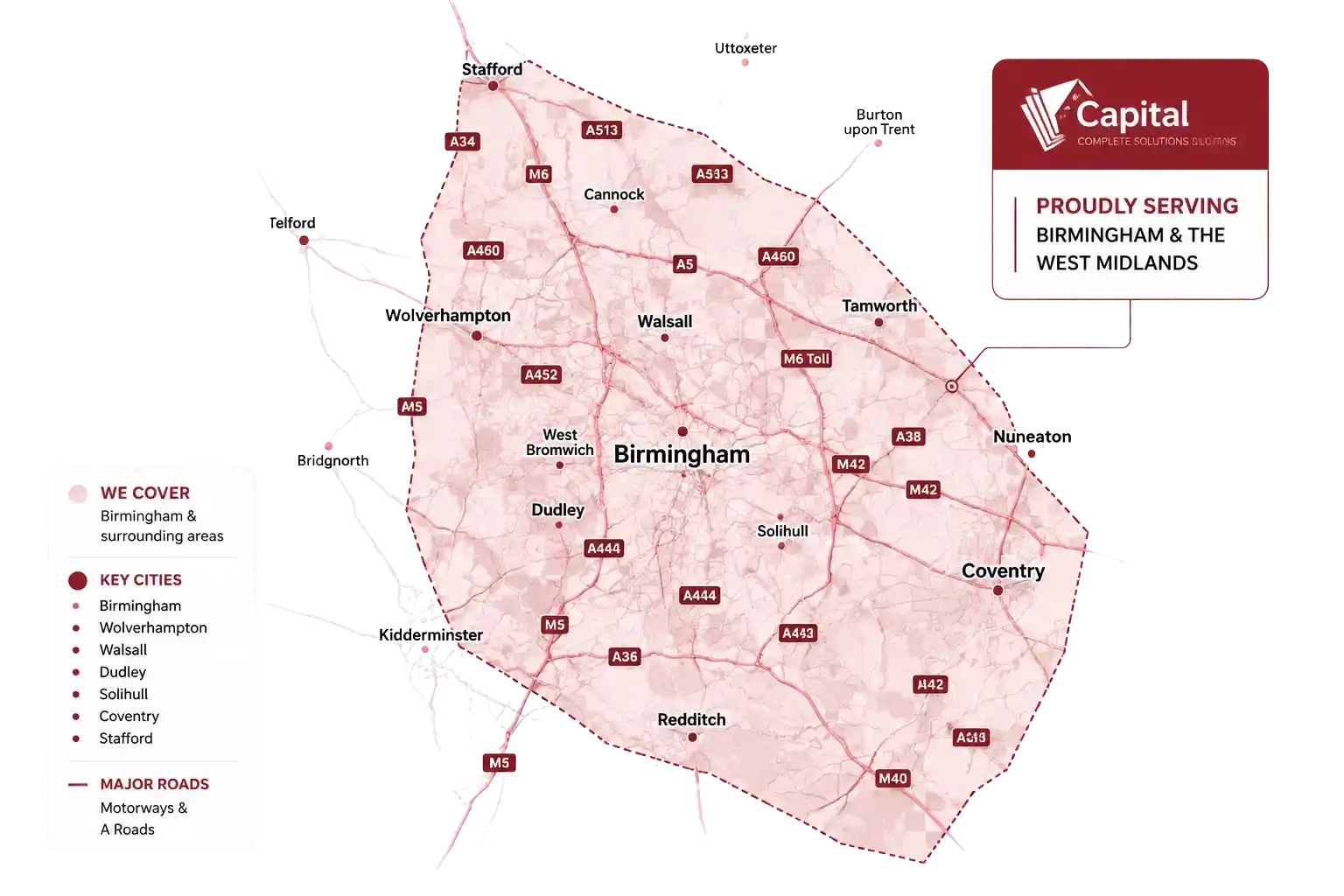
Legionella is the kind of thing that's invisible right up until it isn't. Get it done properly, get it on record, and stop carrying the risk yourself. We cover Birmingham, Solihull, Coventry, Warwickshire and the wider West Midlands. So if you've been searching for a Legionella risk assessment near you, you're already on our patch.

  • AIIC-accredited
  • Same-day inspections
  • 24–48h reports

Frequently asked questions

What is a Legionella risk assessment?

It's a survey of a property's hot and cold water systems to work out where Legionella could grow, who could be exposed, and what controls are needed. It ends in a written record with an action plan. For most domestic properties it's straightforward.

How do you catch Legionnaires' disease?

By breathing in tiny droplets of contaminated water, for example from a shower or spray tap. It's a serious form of pneumonia. Older people and those with weaker immune systems or lung conditions are most at risk.

Is a Legionella risk assessment a legal requirement for landlords?

Yes. Landlords have a legal duty under the Health and Safety at Work Act 1974 and COSHH 2002 to assess and control the risk of Legionella in their property's water system. It can be simple for a straightforward property, but it has to be done.

Who is responsible for the Legionella risk assessment?

The duty holder, which is normally you as the landlord, or your managing agent if they run the property. Whoever does it has to be competent, whether that's you or a professional you appoint.

Do I need a Legionella certificate to let my property?

No. There's no such thing as a legal Legionella certificate, and the HSE has confirmed it. No test certificate is required for a normal domestic let. You need a risk assessment kept on record. If an agent tells you otherwise, they're mistaken.

How often should a Legionella risk assessment be done?

There's no fixed legal interval. The accepted standard is to review it at least every two years, and sooner if anything changes, for example a new tenancy, work on the water system, or a long void. Higher-risk properties like HMOs are often reviewed more frequently.

Do you test the water?

Usually no, and that's the honest answer. Testing or sampling isn't normally required for domestic hot and cold water systems. Temperature control and a proper assessment are what keep the risk down. We only recommend testing where it's genuinely warranted.

How much does a Legionella risk assessment cost?

It depends on the property: its size, how complex the water system is, whether it's an HMO, and how many properties you need covered. A straightforward single let is quick and inexpensive. Tell us about it and we'll give you a straight quote.

Can I do the assessment myself?

You can, if you're competent to do it on a simple property. Most landlords and agents have us do it for the documented, accredited proof, and to take the liability and the legwork off their plate.

What areas do you cover?

Birmingham and the wider West Midlands, including Solihull, Coventry, Warwickshire, Staffordshire and Worcestershire.