AIIC-accredited inventory clerk · Birmingham
A detailed, photo-evidenced inventory report from an independent, AIIC-accredited clerk. When a deposit dispute lands, it's the one document standing between you and handing the money straight back.
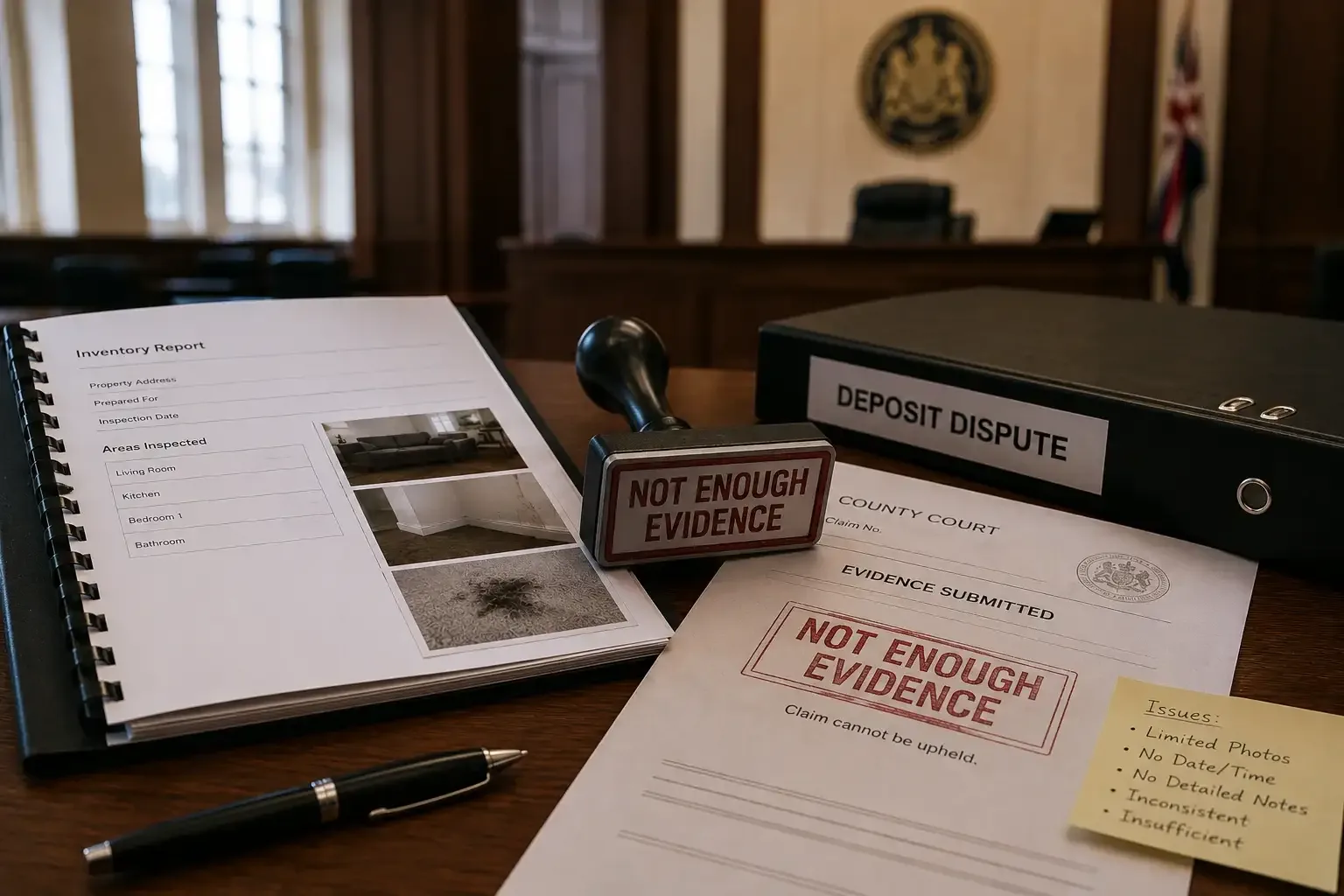
When a deposit dispute goes to adjudication, nobody comes out to look at the property. No hearing. No site visit. No chance to argue your corner in person. The adjudicator just sits with the paperwork and answers one question: was the property handed back the way it was let, allowing for fair wear and tear? This is what I see once in every month.
And they answer it by laying your inventory report next to the check-out and comparing the two, line by line. The burden of proof is on you, the landlord, not the tenant. So if your inventory of the property is a thin checklist and a few blurry phone photos, or there's no report at all, you've nothing to stand on. The deduction fails and the deposit goes back in full.
I've stood in a kitchen at check-out arguing over a chipped worktop that nobody logged on the way in. We knew the tenant did it. Couldn't prove it. So the landlord ate the cost. That's not bad luck. That's a bad report.

You can write your own inventory. There's no law against it. But here's where landlords get caught out: a report you wrote yourself can be picked apart at adjudication for the simple reason that it isn't impartial. You stand to gain from the deduction, so your word on the condition counts for less. Fair or not, that's how, I’ve seen, it's weighed.
An independent clerk has no skin in the game. The report is built on what's actually there, not on what anyone wants the outcome to be. That's the whole point of an AIIC-accredited specialist: the evidence is neutral, so it holds.
And the numbers back it up. Between them, the deposit schemes like TDS, DPS and MyDeposits, protect millions of deposits across England and Wales and settle tens of thousands of disputes a year. Cleaning crops up in over half of those cases; redecoration in nearly a third. The reason landlords lose is almost always the same: their evidence doesn't show the starting condition clearly enough to justify the deduction. A proper inventory report kills that problem before the tenant's even unpacked.

Here's what we make sure:
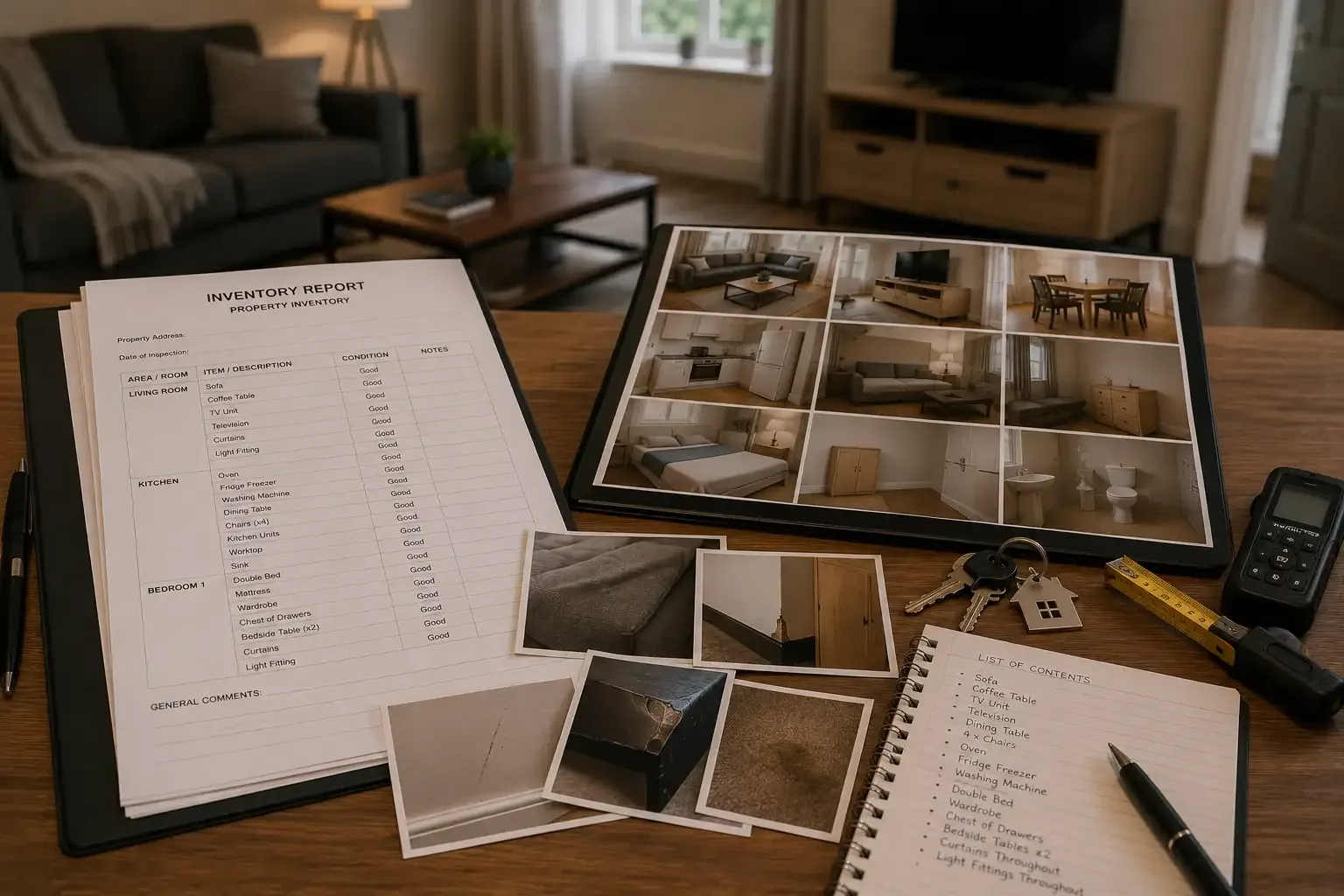
A property inventory report is a detailed written and photographic record of a rental property's condition and contents at the start of the tenancy. It’s what the trade calls a schedule of condition. Ours doesn't leave anything to interpretation. Every report covers:
Walls, ceilings, floors, doors, windows, every fixture and fitting — in plain, consistent language that lets the check-out be matched line by line.
Furniture, white goods and appliances, with make and condition noted wherever it'll matter at the end.
In my experience, cleaning is the single biggest cause of deposit disputes. And "we expected it cleaner" wins nothing without a baseline to point back to.
Gas, electric and water readings on day one, plus every key, fob and permit handed over.
Gardens, outbuildings, lofts, garages. Nine times out of ten, that's exactly where the argument ends up.
Embedded in the report, never stock images. The Tenancy Deposit Scheme's own adjudicators call photographic inventories the single most effective way to support a claim. They're right.
Agree the condition on day one, and there's nothing left to argue on day 365.
Have a flick through examples of our work to see exactly what one looks like.
Book Your Property Inspection in Five Simple Steps
Call us on 0121 582 4070, email info@capital-cs.com, or message us on WhatsApp to discuss your requirements or set up an account.
Choose the service you need and confirm a date and time. We'll take care of the rest.
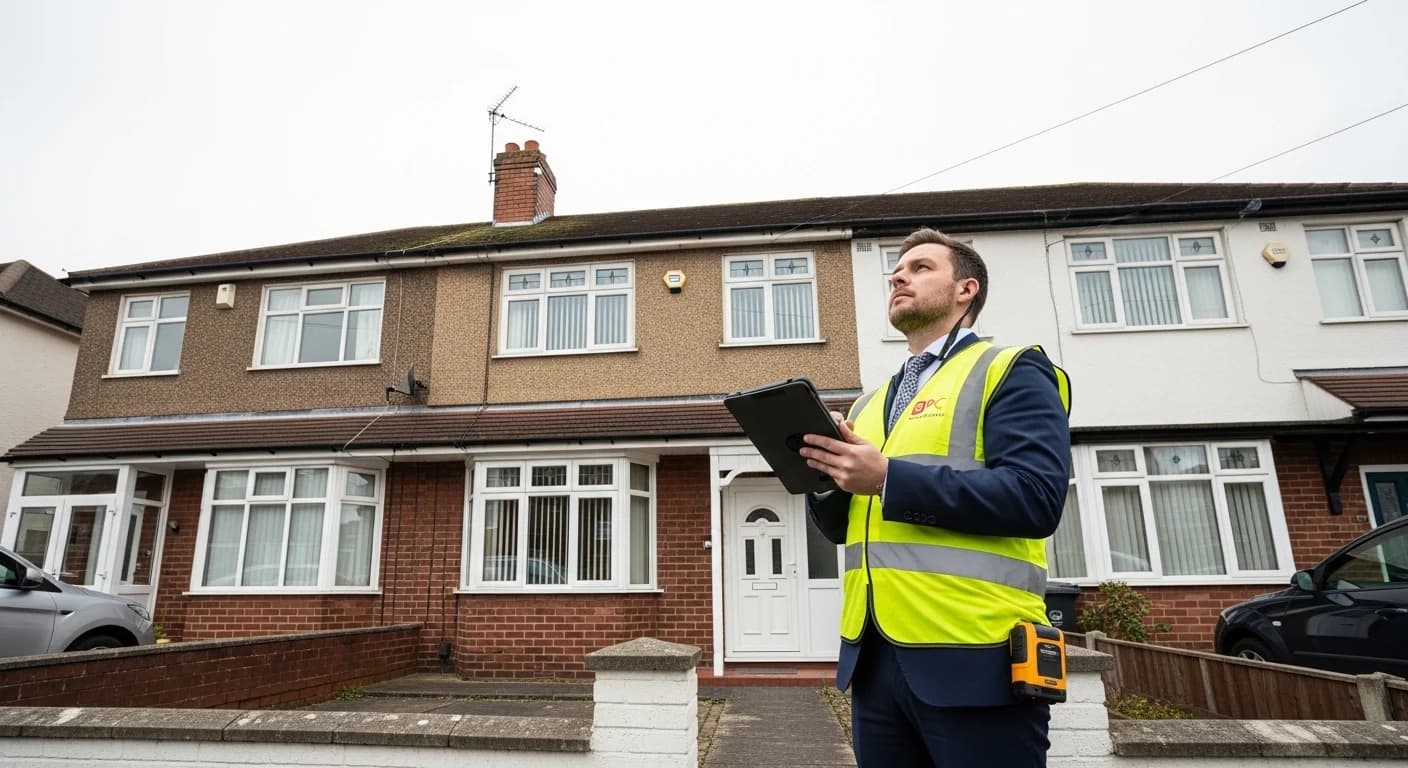
Our AIIC-accredited inspector arrives on time and carries out a thorough, systematic inspection with photographic documentation throughout.
Your detailed digital report is delivered promptly. Clear, professional, and ready to share with landlords or tenants straight away.
Have a question about a report or a deposit dispute? We're always available by phone, email, or WhatsApp to help.
There's no flat price for an inventory, and anyone who quotes you one before they've seen the property is guessing. It comes down to the size of the place, whether it's furnished or unfurnished, and where it is.
What we won't do is race anyone to the bottom. A cheap inventory that loses you a dispute is the most expensive document you'll ever buy. So we lead on accuracy and accreditation at genuinely competitive rates, with recurring accounts and consistent pricing for letting agents and portfolio landlords.
Tell us about the property and you'll get a clear quote.
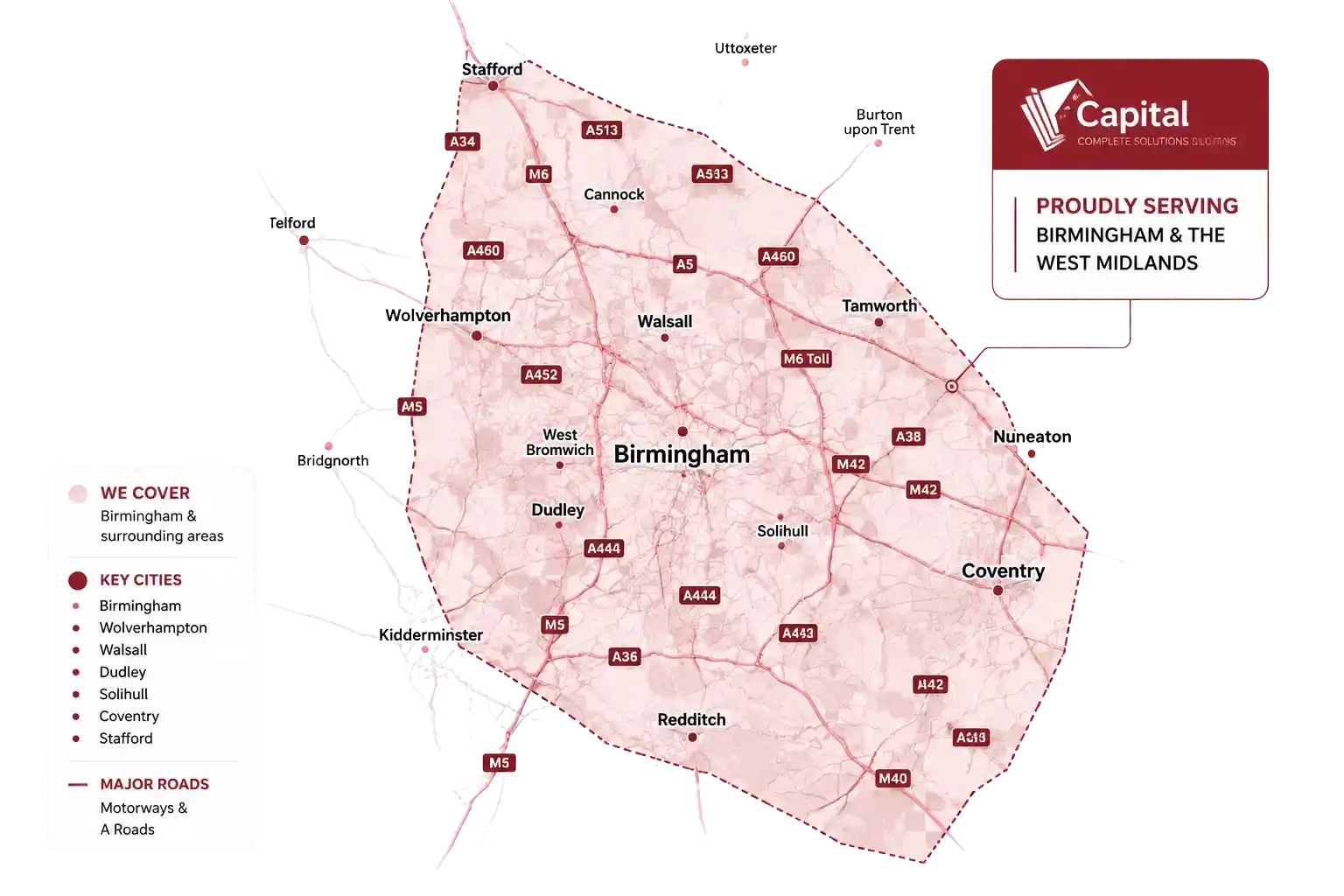
We're based in Stechford, East Birmingham (B33), and produce inventory reports right across the city and the wider region such as Coventry, Wolverhampton, Walsall, and out through Warwickshire, Staffordshire and Worcestershire. Birmingham's housing stock is all over the place, period terraces in Moseley and Kings Heath, student HMOs in Selly Oak, brand-new build-to-rent towers in the city centre and the disputes change with it. The standard doesn't. Whether it's a single flat or a developer handing over a whole block, every unit gets the same detailed report. That consistency, unit to unit, is exactly what build-to-rent operators and property developers are after.
Areas we cover
Wider region
Based in Stechford, East Birmingham (B33)

Ready when you are
A dispute is won on evidence and lost on a vague report. Get the inventory right at the start, and most of the trouble at the end simply never happens. Agents and portfolio landlords: ask about a recurring account.
It's a detailed written and photographic record of a rental property's condition and contents at the start of a tenancy. Sometimes it’s called a schedule of condition. It logs every room, fixture, fitting and appliance with timestamped photos, creating an agreed baseline to compare against when the tenant moves out. In a deposit dispute, it's the primary piece of evidence the adjudicator relies on.
A thorough report covers a room-by-room schedule of condition (walls, floors, ceilings, fixtures and fittings), an inventory of furniture and appliances, the cleanliness and décor of the property, meter readings, a full key schedule, gardens and outbuildings, and timestamped, high-resolution photographs throughout, with space for the tenant to sign and agree it.
Work through the property methodically, room by room, before the tenant moves in. Describe the condition and cleanliness of every surface, fixture and item in plain, consistent language; photograph everything with date-stamped images; record the meter readings and keys; then have the tenant review and sign it at the check-in. The detail and consistency at this stage are what make a check-out comparison stand up later. Most landlords get a far stronger result using an independent clerk than doing it themselves.
Yes. There's no legal requirement to use a clerk. But a self-made inventory is harder to lean on in a dispute, because adjudicators trust impartial, professionally produced evidence over a report written by the person who stands to keep the deduction. An independent, AIIC-accredited report takes that weakness off the table. In my experience, it's the cheapest insurance a landlord can buy.
Yes. If anything, more reason to, not less. An inventory isn't just a list of furniture. It records the condition of the property itself: the walls, ceilings, floors, kitchen units, bathroom, doors, windows, paintwork and cleanliness. And that's where most deductions actually come from like scratched flooring, a chipped worktop, walls crying out for a repaint. No report, no proof any of it was fine on day one. Furnished or empty, you still need the record.
The inventory report is the document, the detailed written and photographic record of the property's condition and contents. The check-in is the appointment where we walk the tenant through that inventory on move-in day, take meter readings, hand over keys and get the report signed so the condition is agreed. In short: the inventory is the evidence; the check-in is where the tenant agrees to it. Both matter, and they're often done together.
It's the running list of everything an inventory should capture. It includes each room's condition, contents, cleanliness, meters, keys, and external areas, so nothing's missed. A professional inventory report is that checklist done properly, in detail and backed by dated photographs, rather than a one-page tick sheet. Our guide to what a property inventory report is breaks it down further.
It depends on the property's size, furnishings and location. Rather than a one-size price that won't fit your property, we give a clear quote once we know the details, with recurring accounts for agents and portfolio landlords. For more on how a solid report protects you when a deduction is challenged, see our guide to handling deposit disputes in Birmingham.