What Is an EPC and When Does Your Rental Property Need One?
EPCs trip up more landlords than any other bit of compliance. Here's what one is, when your rental actually needs it, and why the deadline most people quote is wrong.
Two things landlords get wrong about EPCs. I hear both most weeks.
The first is the deadline. Plenty of people think they've got until 2028 to reach a C. They haven't. That proposal was dropped. It's 2030, and it's one date for everybody.
The second is timing. Landlords treat an EPC like a gas safety certificate, an annual job you keep topped up. It isn't. The duty is triggered by events, not by the calendar. Get that straight and most of the panic goes.
Here's the lot, in the order it matters. This covers England and Wales. Scotland and Northern Ireland run their own rules.
What is an EPC?
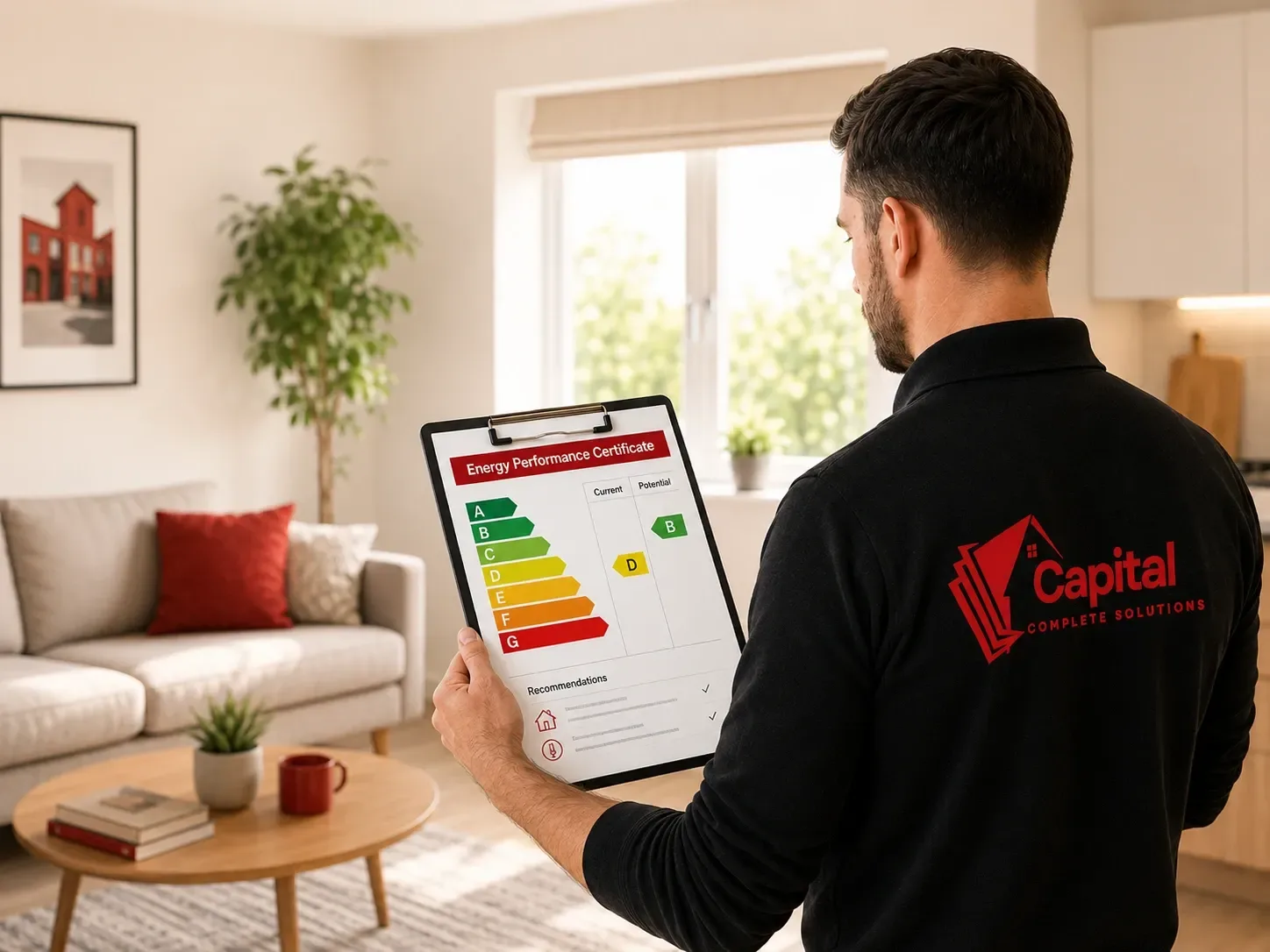
An EPC is an Energy Performance Certificate. It rates a property from A to G and lasts ten years. You need a valid one at two moments: when you market the property, and when you grant a new tenancy. The minimum you can let at today is band E. That rises to band C on 1 October 2030.
It's been a legal requirement for letting since 2008.
An accredited domestic energy assessor visits and measures up. They record what the building is made of and how it's heated: walls, loft, floors, glazing, boiler or heat pump, controls, hot water, lighting. That goes through the government's RdSAP methodology and produces two things:
- The rating. The A to G scale on the certificate, driven by the Energy Efficiency Rating (EER).
- A recommendations report. Improvements, and what each one would do to your score. The certificate is then lodged on the national EPC register. Anyone can look it up. So can your council.
Most homes in England sit at band D. Band C is where everything is heading.
One thing worth saying plainly. An EPC assesses the building, not its condition. It won't tell you the boiler is on its way out.
When does your rental property actually need an EPC?
This is the bit that gets muddled. The duty is event-based. Two events trigger it.
One, when you market the property. You must commission the EPC before it goes on the market. You need to hold it within seven days of first advertising, or 21 days if that genuinely isn't possible. The rating has to appear in the advert. Anyone viewing must be able to see the certificate.
Two, when you grant a new tenancy. The tenant gets a free copy. Not a link. Not "it's on the register". A copy.
That's it. There's no rolling annual duty. You don't have to hold a live certificate at all times just because someone lives there.
Do you need a new EPC if yours expires mid-tenancy?
Under the current rules, no.
Say your tenant moved in with a valid EPC. Two years later it expires. Nothing is triggered. The tenancy is continuing, so you're not marketing and you're not granting a new one. You'd need a fresh one before you next advertise or re-let.
I'd still get one done, mind. If you're sitting at a D with 2030 coming, an expired certificate is a blind spot.
But watch this space. Under the EPC reforms, government has confirmed that rented properties will need a new EPC when the old one expires. That turns it into a continuous duty. It isn't in force yet. It's tied to the new-style certificates arriving in 2027. It's coming. It isn't the rule today.
And let's bin some old advice while we're here. The rule that you couldn't serve a valid section 21 notice without giving the tenant an EPC is history. Section 21 was abolished on 1 May 2026. That stick is gone. The penalties below are not.
What EPC rating do you need to let a property right now?
Band E, minimum.
Under the Minimum Energy Efficiency Standard, or MEES, letting a property rated F or G is unlawful. The only way round it is a registered exemption. That rule hit new tenancies from 1 April 2018 and every existing tenancy from 1 April 2020.
The current spending cap to get a property up to E is £3,500 including VAT. If the cheapest suitable measure costs more, you may qualify for a high-cost exemption. But you have to register it. Assuming it doesn't count.
Is the EPC C deadline 2028 or 2030?
1 October 2030. One date. All tenancies. No split between new and existing lets.
It was confirmed in January 2026 under the Warm Homes Plan, and it replaced the earlier 2028 proposal for new tenancies. If you've read a blog telling you 2028, it's out of date.
Here's what changes:
| Now (band E) | From 1 October 2030 (band C) | |
|---|---|---|
| Cost cap | £3,500 inc VAT | £10,000, or 10% of value for homes under £100,000 |
| Maximum penalty | £5,000 per property | £30,000 per property, per breach |
| Exemption length | 5 years | 10 years, where you spend the cap and still fall short |
Two details worth knowing.
Qualifying spend from October 2025 onwards counts towards the £10,000 cap. Keep your invoices.
And the standard becomes a dual test. The property has to meet a fabric performance requirement, and either a heating system efficiency or a smart readiness requirement.
The policy is confirmed. The legislation isn't made yet. Government intends to lay it so it bites in 2027, so the fine detail can still shift. Plan for it anyway. Four years sounds like plenty until you're trying to book an installer in 2029 alongside everyone else.
Do HMOs need an EPC?
Right now it depends how you let it.
- Whole house, one joint tenancy. Yes, you need an EPC.
- Room by room, separate agreements. No EPC is currently required. That second one is going. The reforms remove the room-only exemption. An HMO let by the room will need an EPC for the house, one certificate for the property, not one per room. There's a 24-month transition to comply.
Got student houses around Selly Oak or Aston you've never had assessed because you let by the room? This is the paragraph to act on.
The timing is awkward too. With fixed terms gone under the Renters' Rights Act, you can't rely on a tidy summer void to get major works done.
Which properties don't need an EPC at all?
Short list. Shorter than people think.
Places of worship. Temporary buildings meant for two years or less. Stand-alone buildings under 50m². Some industrial and low-energy-demand agricultural buildings. Residential buildings used less than four months a year.
Listed and protected buildings used to sit on that list. The reforms remove that exemption, so heritage properties will need a valid EPC when marketed, let or sold. MEES improvement exemptions still apply where works would unacceptably alter the character of the building. Short-term lets are being brought into scope too.
So "it's listed, I don't need one" is advice with a shelf life.
What happens if you let without a valid EPC?
There are two separate penalty regimes here. Most guidance online mashes them together. They're different breaches with different consequences.
Failing to give a tenant an EPC. A £200 penalty charge per dwelling, issued by Trading Standards under regulation 38 of the Energy Performance of Buildings Regulations 2012. They can act up to six months after the breach.
Letting below the minimum standard. That's a MEES breach, enforced by your local authority, and it's up to £5,000 per property. Up to £2,000 for a breach under three months. Up to £4,000 for three months or more. Up to £1,000 for false information on the exemptions register. They can also publish the breach for at least 12 months, which is the part that stings if you're building a portfolio.
From 2030, that MEES maximum rises to £30,000 per property, per breach.
Are there exemptions if you can't reach the standard?
There are. But every one has to be registered on the PRS Exemptions Register to count. An unregistered exemption is just a non-compliant property with a good excuse.
The main ones:
- All relevant improvements already made
- High cost, where the cheapest measure exceeds the cap
- Wall insulation that would damage the property
- Third-party consent refused, by a freeholder, planning, or the tenant
- Devaluation of more than 5%
- A six-month temporary exemption if you've just become a landlord, an inherited property being the usual case Current exemptions run for five years. Then you look at it again.
EPCs themselves are changing. What's coming?
The certificate is being rebuilt, not just the standard.
- The single A to G headline gets replaced by four headline metrics for homes: energy cost, fabric performance, heating system efficiency, and smart readiness.
- New-style EPCs are expected in the second half of 2027. They slipped from an earlier October 2026 target.
- They'll be produced using the Home Energy Model, which replaces the current SAP methodology.
- Validity stays at ten years. A proposal to cut it to five was consulted on and dropped.
- Certificates lodged under the current method keep running for their full ten years. So if you get an EPC done this year, it isn't wasted.
How much does an EPC cost, and how long does it take?
For a typical house or flat, EPCs generally run £60 to £120. It depends on size, property type and where you are. Prices vary by assessor, so get a quote rather than assuming.
The visit itself is usually under an hour for a standard two or three-bed. The certificate goes on the register shortly after.
Here's a practical tip. Book it alongside your other tenancy-start work. If we're already at the property doing your property inventory report or the tenant check-in, the EPC assessment can be done on the same visit. One appointment. One provider. One set of paperwork, instead of three people chasing access to an empty flat in the same week.
The EPC isn't the only duty landing at the start of a tenancy, either. Whether you need a Legionella risk assessment is the question I get asked most often straight after this one.
How do you improve an EPC rating?
Fabric first. It's what the new metrics reward, and it's usually the cheapest way up the scale.
- Loft insulation to current depth. Best value move on most Birmingham terraces.
- Cavity wall insulation, if the walls take it. Much of the inter-war stock does.
- Draught-proofing. Doors, floors, letterboxes. Cheap, and it moves the number.
- Double glazing where you've still got single.
- Heating and controls. An efficient boiler with a room thermostat and TRVs, or a heat pump where the fabric supports it.
- Low-energy lighting throughout. Small, but free points.
- Solar and a smart meter, if you're going further. Solar helps the energy cost metric. Smart readiness is one of the new tests. Get the EPC done first. The recommendations report tells you what each measure is worth on your property. Beats guessing.
What does this mean for Birmingham landlords?
Our patch is full of the stock this affects. Victorian and inter-war terraces through Small Heath, Sparkhill and Acocks Green. Solid-wall houses that won't take cavity insulation. Converted flats on electric heating. Student HMOs around Selly Oak that have never been assessed, because they're let by the room.
If that's your portfolio, the gap to a band C won't close on its own.
The landlords who'll be fine in 2030 are the ones who find out their rating now and spread the work out. The ones who leave it will be chasing installers in the final twelve months, at the worst prices of the cycle.
Start with the certificate. You can't plan against a number you haven't got.
Sort your EPC and your tenancy paperwork in one go
We carry out EPC assessments across Birmingham, the West Midlands, Warwickshire, Staffordshire and Worcestershire. Assessed, produced and lodged on the national register.
- AIIC-accredited
- Same-day cover
FAQs
Is an EPC a legal requirement to rent out a property?
Yes. You need a valid EPC before you market a property to let in England and Wales. You must also give the tenant a free copy when you grant the tenancy.
What is the minimum EPC rating for a rental property right now?
Band E. Letting a property rated F or G is unlawful unless you've registered a valid exemption on the PRS Exemptions Register.
When do rental properties need to be EPC C?
1 October 2030. It's a single date covering all tenancies. The earlier 2028 proposal for new tenancies was dropped.
How long does an EPC last?
Ten years. That stays the same under the reformed system. A proposal to shorten it to five years wasn't taken forward.
Do I need a new EPC for every new tenant?
No, only if the existing one has expired. A valid EPC covers any number of new tenancies until its ten years are up.
Do I need to renew an EPC that expires mid-tenancy?
Not under the current rules. A continuing tenancy doesn't trigger the duty. You'll need a new one before you next market or re-let. This is set to change under the EPC reforms, so don't build a long-term plan around it.
Does an HMO need an EPC?
If it's let as a whole property on one joint tenancy, yes. Room-only lets don't currently need one, but that exemption is being removed with a 24-month transition. After that, the house needs a single EPC.
Are listed buildings exempt from needing an EPC?
Historically yes. That exemption is being removed under the reforms. Improvement exemptions under MEES will still apply where works would unacceptably alter the building's character.
What is the fine for letting a property without a valid EPC?
Failing to provide an EPC to a tenant carries a £200 penalty charge per dwelling. Letting below band E is a separate breach carrying up to £5,000 per property, rising to £30,000 from the 2030 regime.
Who pays for the EPC, landlord or tenant?
The landlord. Always.
How do I check whether my property already has an EPC?
Search the national EPC register on GOV.UK using your postcode. It shows the rating and the expiry date.
How long does an EPC assessment take?
Usually under an hour for a standard two or three-bed. Larger or unusual properties take longer.
Can I get the EPC done at the same time as the inventory?
Yes. That's how we'd normally recommend doing it. One visit at the start of the tenancy covers the EPC assessment and the inventory or check-in.
This article is general guidance for landlords and letting agents, not legal advice. For your specific duties, check current GOV.UK guidance or speak to a qualified professional. EPC and MEES rules are moving quickly, so this reflects the position as at August 2026.
Written by
Founder, Capital Complete Solutions. AIIC-accredited property inventory and compliance specialists, Birmingham.