What Is an HMO? A Birmingham Landlord's Complete Guide
Most landlords I meet don't know their house is an HMO until it's a problem. A complaint. A knock from enforcement. A penalty notice on the mat. Suddenly that "house-share" is a £40,000 question.
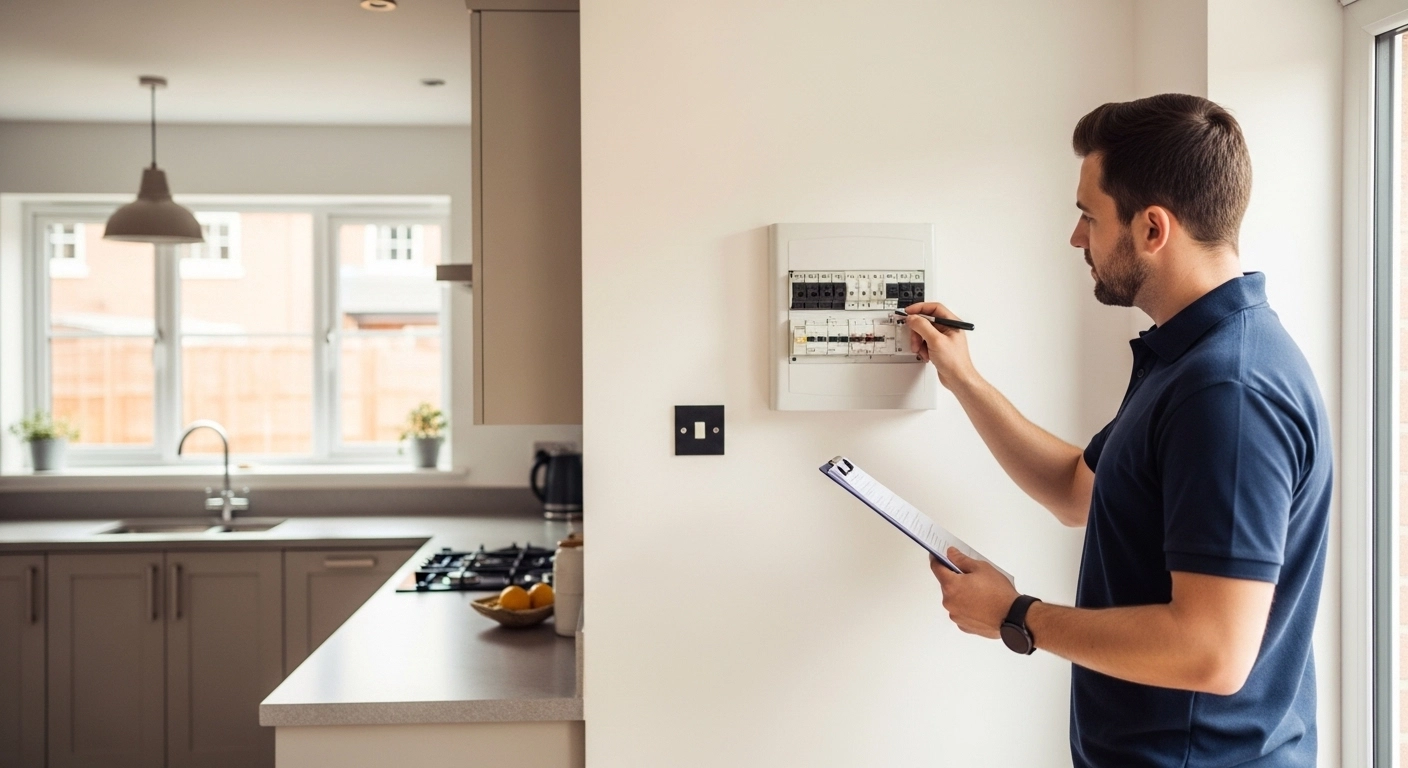
I've inspected hundreds of shared houses across Birmingham. Student lets in Selly Oak, professional shares in the city centre, family terraces quietly turned into rooms-for-rent. And the landlords who get caught aren't the cowboys. They're ordinary people who didn't realise they'd crossed a line. So let's draw that line clearly.
What is an HMO?
An HMO is a property rented to three or more people from two or more separate households who share a kitchen, bathroom or other facilities. A "household" is one person or one family. Three mates from different families sharing a kitchen? Two households, easily. A couple plus a lodger? Also two. Call it a shared house, a bedsit, a house-share — legally it all lands in the same place under the Housing Act 2004. The label means nothing; the living arrangement is everything.
Two things people get wrong. First, a single family counts as one household, so a family of six in a four-bed semi is a normal tenancy, not an HMO. Second, students are usually several households, not one, so a typical Selly Oak student let is an HMO.
The HMO test
Three or more people · two or more households · sharing facilities. Tick all three and you've got an HMO — whatever you call it.
Do I need an HMO licence?
You need a mandatory licence if your property houses five or more people from two or more households sharing facilities. That applies anywhere in England. Back in October 2018 the old "three storeys" rule was scrapped, so it's now purely about occupancy, not how tall the building is. The licence runs up to five years and comes from your council.
But five isn't always the magic number, and this is where Birmingham landlords trip. Councils can run additional licensing that pulls in smaller HMOs, often at three or four occupants, and selective licensing that demands a licence for every private rented home in a chosen area. A three-bed share that needs nothing on one street might need a licence two streets over.
Licensing at a glance
- 2 tenants — not an HMO at all.
- 3–4 — an HMO, but you only need a licence if your council runs an additional scheme.
- 5 or more — always needs a mandatory licence.
With three or four, the only way to be sure is to ask the council. The rules genuinely shift postcode to postcode.
How do I get a licence, and what does it cost?
You apply to your council, pay the fee, and pass a "fit and proper person" check plus the property and management standards. The council may inspect before granting.
There's no national figure on cost. Fees are set by each council and vary widely — often a few hundred pounds up to over a thousand depending on area and property size. Confirm the current fee with the council before you budget. Don't guess, and don't apply late thinking it tidies things up: running the HMO unlicensed before you applied is still an offence.
What are the HMO rules for landlords?
You've got to meet minimum room sizes, keep up the safety checks, provide proper facilities and waste arrangements, and prove you're fit and proper. These are licence conditions under the Housing Act 2004. None of it is optional.
Safety means an annual gas safety check, an EICR (fixed-wiring inspection) every five years, working smoke and CO alarms, fire doors and clear escape routes. More people, more cooking, more risk — so the bar sits higher than a single let. And this is where it slips: alarms get unplugged, fire doors get wedged open, a tenant shoves a wardrobe across the escape route. A routine mid-term inspection catches that drift before it becomes a breach.
One more thing on responsibility: the licence holder carries the liability, and that's usually you. You can hand the day-to-day to an agent, but you can't hand over the liability. If your name's on the licence, the council comes to you.
This article is general guidance for landlords and letting agents, not legal advice. For your specific duties, check current HSE / GOV.UK guidance or speak to a qualified professional.
Minimum room sizes
6.51m² for one adult · 10.22m² for two adults sharing · 4.64m² for a child under 10. Any floor space where the ceiling drops below 1.5m doesn't count. Come in under the minimum and the council bans the room as a bedroom — so measure it properly before you advertise it.
What happens if I rent out an unlicensed HMO?
It's a criminal offence, and the money side is brutal. Instead of prosecuting, a council can issue a civil penalty — and the fine is only half of it. The Renters' Rights Act 2025 doubled the Rent Repayment Order window from 12 months to 24, so tenants can claw back up to two years' rent paid while the place was unlicensed. Across a five-room HMO, that's a number that finishes landlords. The cruellest part: applying late doesn't cure the breach.
The £40,000 question
A council can issue a civil penalty of up to £40,000 per offence (up from £30,000 on 1 May 2026), or prosecute for an unlimited fine plus a criminal record. Plus tenants reclaiming up to 24 months' rent. If you take one thing from this guide: check whether you need a licence before the tenants move in, not after the letter arrives.
What did the Renters' Rights Act change for HMO landlords?
Section 21 "no-fault" evictions are gone. Every tenancy is now a rolling periodic contract, and the penalties have sharpened. Student landlords did get one tool: under the new Ground 4A, you can reclaim a student HMO in time for the next academic year, so the September turnover still works. But you can't serve a valid eviction notice on an unlicensed HMO at all. Licensing and possession are now tied tighter than ever — tight records are your defence.
The Birmingham angle: Article 4 and Selly Oak
Here's what national guides skip. Since 8 June 2020 a city-wide Article 4 Direction has covered the whole of Birmingham, removing permitted development rights for turning a family home (Use Class C3) into a small HMO (Use Class C4). In plain English: anywhere in the city, converting a normal house into a small share for three to six people now needs a planning application. The old direction covering only Selly Oak, Harborne and Edgbaston was scrapped that day and folded into the city-wide one.
That matters if you're buying to convert. Before you buy a Selly Oak terrace chasing HMO yields, know whether it already has lawful HMO use, or whether you'll need planning permission and a licence to get there.
Buying to convert in Birmingham?
Check for a Certificate of Lawful Use before you buy. A property without one can be an expensive surprise — HMO status, licensing and planning all have to line up.
Where Capital fits in
HMOs are exactly where thin reports show: high churn, multiple rooms, several deposits in play, a council that can ask about compliance any day. Get the documentation right and you're covered on every front.
Inventory reports
Nothing's arguable when tenants leave.
A detailed, photo-evidenced inventory for each room.
Learn moreCheck-out inspections
Win the deductions students love to fight.
Dispute-ready, compared line by line against the original.
Learn moreLegionella risk assessments
The shared water systems you're on the hook for.
Covers your legal water-safety duty across the property.
Learn more
HMO compliance, handled
Letting an HMO in Birmingham or Solihull?
Capital provides AIIC-accredited HMO inventories, inspections and compliance reports — accredited, neutral, and built to stand up to an adjudicator or an enforcement officer.
- AIIC-accredited
- HMO-aware reports
FAQs
What is meant by HMO?
A House in Multiple Occupation: a property let to three or more people from two or more separate households who share a kitchen, bathroom or other facilities. It covers most shared houses, bedsits and student lets.
How much does an HMO licence cost?
There's no national figure. Each council sets its own fee, commonly a few hundred pounds up to over a thousand depending on area and size. Confirm the current fee with your council before applying.
How long does an HMO licence last?
Up to five years, then you renew. A council can grant a shorter one in some cases.
What is the penalty for an unlicensed HMO?
A criminal offence. Councils can issue a civil penalty of up to £40,000 per offence (up from £30,000 on 1 May 2026), or prosecute for an unlimited fine. Tenants can also reclaim up to 24 months' rent through a Rent Repayment Order.
Do I need planning permission for an HMO in Birmingham?
For a new conversion, usually yes. Since 8 June 2020 a city-wide Article 4 Direction means turning a family home into a small HMO anywhere in Birmingham needs a planning application.
Are students in a shared house an HMO?
Usually yes. Unrelated students form several households, so a typical student share meets the definition. At five or more occupants it needs a mandatory licence.
Mr Waqas is the founder of Capital Complete Solutions, an established, AIIC-accredited property inventory and inspection business based in Stechford, Birmingham (B33), serving Birmingham, the West Midlands, Warwickshire, Staffordshire and Worcestershire.
Written by
Founder, Capital Complete Solutions. AIIC-accredited inventory specialist, Birmingham.