Meter Readings at Check-In, and Why They Matter
Meter readings at check-in record exactly how much gas, electricity and water was used before the tenant took over. That one set of numbers decides who pays for what. Get it right and every bill starts from the right place. Miss it and you're arguing over estimates.
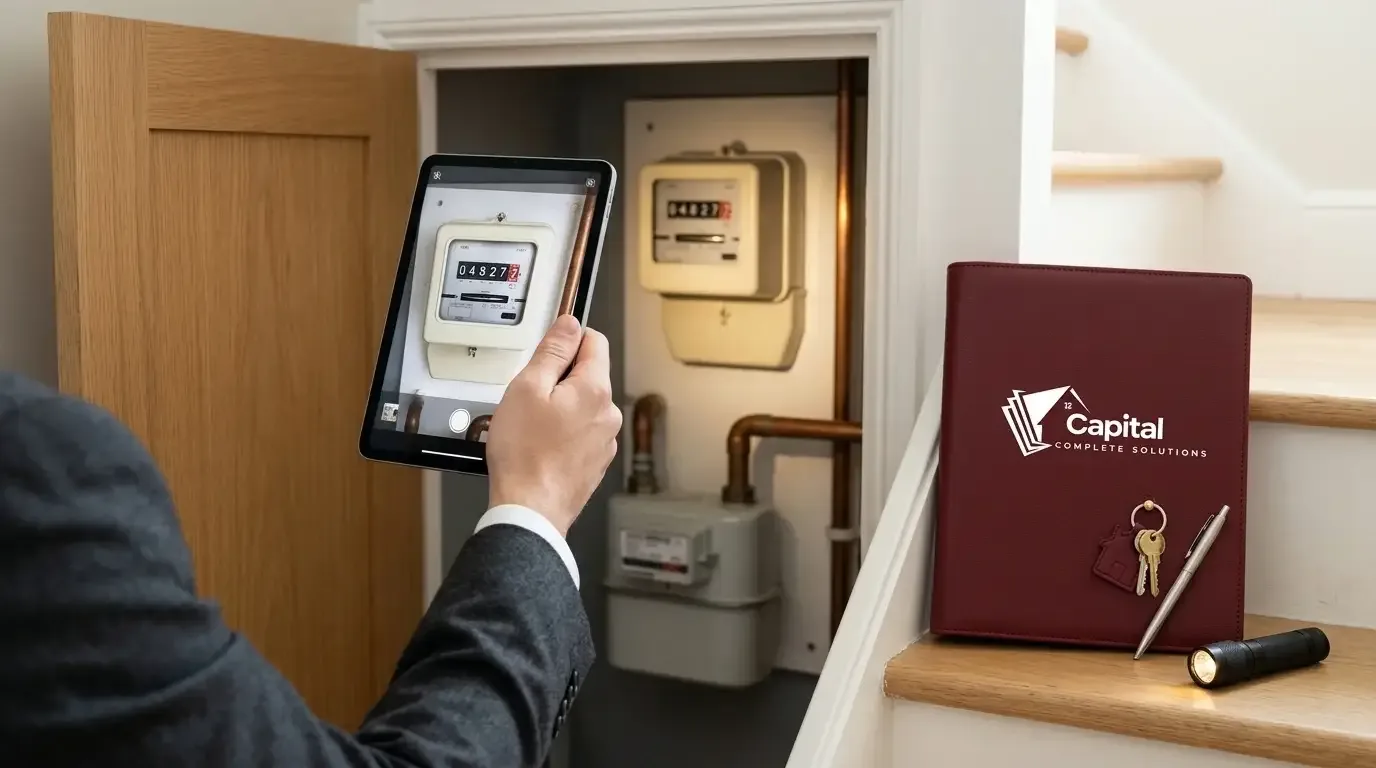
It's the smallest job on move-in day. It's also the one that causes the most phone calls three months later.
A meter photo takes ten seconds. Sorting out a disputed estimated bill can take weeks of emails between you, the tenant and a supplier who wasn't there. So here's what to record, who does what with it, and what goes wrong when nobody bothers.
Why do meter readings at check-in matter?
Meter readings at check-in draw a line under everyone else's usage. Everything before that number belongs to the last tenant, or to you if the place stood empty. Everything after it belongs to the new tenant.
That line does three jobs.
- It protects the new tenant. They shouldn't pay for energy the last occupier used.
- It protects you. If the property was empty between tenancies, you pay for that gap. A dated opening reading shows exactly how big the gap bill should be.
- It heads off the argument at check-out. The opening reading and the closing reading sit in the same format, in two signed reports. Nobody has to guess. The problem is that plenty of people skip it. One 2022 survey quoted by the NRLA found 42% of renters said they don't take meter readings at check-in. So if your tenant isn't doing it, somebody else needs to.
Which meters should be read at check-in?
Read every meter the property has. For most rentals that means gas, electricity and water, if the water is metered.
Here's the list I work through:
- Gas. One reading, plus the meter serial number.
- Electricity. One reading on a standard meter. On an Economy 7 or other two-rate meter, take both the day and night readings. Missing one is a classic mistake.
- Water. Only if there's a meter. Plenty of homes are still on unmeasured water charges, so there's nothing to read. Write "no water meter" in the report so nobody wonders later.
- Smart and prepayment meters. Read them anyway. More on these below.
- Oil or LPG. If the property runs off a tank, note the level. Note the meter type as well. Smart, prepayment, two-rate, or an old radio teleswitch meter. It tells the tenant what they're dealing with and flags anything you might want to replace.
What does a proper meter record look like?
A proper meter record is a reading backed by a dated photo of the meter it came from. A number typed into a report with no photo is a claim. A photo with the serial number visible is evidence.
Meter record checklist
For each meter, the check-in report should show:
- The reading, or both readings on a two-rate meter
- The meter serial number
- The MPAN (electricity supply number) or MPRN (gas supply number), if it's on a bill or label on site
- Where the meter is: under the stairs, in a cupboard, in an external box, in a communal meter room
- The meter type: standard, two-rate, smart or prepayment
- A time-stamped photo, close enough to read the digits and the serial
- The credit or debt shown on a prepayment meter
- Any key or card needed to get to it The deposit schemes expect this level of detail. mydeposits lists meter readings, serial numbers and key lists among the things a check-in report should contain.
The tenant should check these too. Shelter tells tenants they can correct meter readings on the inventory before they sign it. Good. If there's a disagreement, I'd rather it happened on move-in day with the meter in front of us.
Who takes the readings, and who tells the supplier?
The clerk takes the readings and records them in the check-in report. The person who pays the bills then gives those readings to the supplier.
These are two separate jobs, and people mix them up.
An inventory clerk records the meters as evidence. We don't open, close or transfer anyone's energy account. That stays with whoever is responsible for the bills under the tenancy agreement, which is usually the tenant.
Shelter's advice to tenants is clear. Take readings and photos on the days you move in and out, and send them to your energy and water suppliers and to your landlord. The check-in report gives them a dated, agreed set to send.
On water, Severn Trent covers most of Birmingham, and its moving-in process asks new customers for an up-to-date meter reading. The figure in the report is exactly what they need.
Who pays the bills between tenancies?
You do. When a rental sits empty between tenancies, the landlord becomes responsible for the utility bills.
That's why the closing reading at check-out and the opening reading at the next check-in matter so much. Together they show the exact usage in the empty period. Without them, the supplier estimates, and estimates usually run high.
Council tax usually falls to you as the owner while the property is empty too. Check Birmingham City Council's current rules on empty homes, or the rules of whichever council covers your let.
During the tenancy, your tenancy agreement decides who pays what. Shelter puts it simply. If bills are included in the rent, the landlord is responsible for them. If not, the tenant normally deals with the suppliers directly.
Tenants often ask what bills they pay when renting. Usually it's gas, electricity, water, council tax and broadband, unless the agreement says otherwise. For anything unusual, point them to Citizens Advice or Shelter.
What goes wrong when nobody takes a reading?
Without a reading, the bills run on estimates and nobody can prove where one occupier's usage ends and the next one starts. Here's how that usually plays out.
The estimated bill. The supplier guesses. The guess is wrong. Months later an actual reading lands and somebody gets a catch-up bill they didn't expect.
The previous tenant's debt. A new tenant who uses energy without setting up an account ends up on what Ofgem calls a deemed contract with whoever already supplies the meter. These are usually among a supplier's most expensive rates. If the last occupier left a balance, a dated opening reading is how the new tenant shows where their usage started. The previous tenant's unpaid bills aren't the new tenant's to pay.
The occupier letter. Bills addressed to "the occupier" still count. Shelter warns tenants they might have to pay even if their name isn't on the bill. That's another reason to get a reading on record the day they move in.
The back-bill. Ofgem banned suppliers from back-billing domestic customers for energy used more than 12 months before the bill. The exception is where the customer was obstructive, such as blocking access to the meter. A clean set of readings at check-in and check-out keeps everyone well inside that window.
Ofgem is also looking at how energy debt is handled when people move home. It ran a call for input on the home-move process, so this is an area worth watching.
Do smart and prepayment meters still need a reading?
Yes. Smart doesn't mean somebody wrote it down, and prepayment doesn't mean the meter is clear.
Smart meters. A smart meter is supposed to send readings automatically. It doesn't always. Citizens Advice tells people to check their bills aren't estimated even with a smart meter, because it might not be sending readings. Photograph the display at check-in like any other meter.
Prepayment meters. Record the credit or the debt shown on the screen. A prepayment meter can carry a balance from the last occupier. If nobody notes it, the new tenant often finds out when they top up and the money disappears.
Tenants who pay their own bills can change their energy set-up. Shelter says they don't need the landlord's permission to switch supplier, or to switch meter type, though they may have to pay to change the meter back when they leave. Record the meter type at check-in, then compare it at check-out.
What about bills-included lets and HMOs?
If the bills are included in the rent, you're the account holder, so the readings protect you first. They show what the property used and when.
There's a limit on what you can recharge. Shelter says a landlord must not charge tenants more than the energy or water company charges them, and shouldn't make a profit from it. Where several tenants share one meter, you need to be able to explain how each person's share is worked out.
That matters in shared houses, from student lets in Selly Oak to professional house shares across the city. There's more on running one in our guide to what an HMO is. For meters, the rule is simple: one dated reading per meter at every change of occupant.
What happens to the readings at check-out?
At check-out, the same meters get read again, in the same format, with the same kind of photo. The closing readings then sit next to the opening ones from the check-in report.
That pairing does the work. The tenant gives the closing figures to their suppliers for a final bill. You use them to open the void period, or pass them to the next tenant's check-in. Nobody has to argue about who used what.
On water, give the company notice. Citizens Advice says to allow at least five working days so it can arrange a final meter reading.
A check-out inspection that records the meters the same way as the check-in closes the loop. If you want to see how the two reports fit together, there's a full breakdown of the difference between check-in and check-out.
How we record meters at every check-in
On every check-in, we read the gas, electricity and water meters and photograph each one with a time stamp. The report shows the reading, the serial number, where the meter is and what type it is.
We use the same format again at check-out. So when the two reports sit side by side, the meters match line by line, just like the rest of the inventory report.
Meters are one part of move-in day. For the full running order, from the walk-through to the keys and the sign-off, see what happens at a check-in on move-in day.
Letting in Birmingham or the West Midlands? Book a professional check-in and the meters are done properly, photographed and signed for on the day.
This article is general guidance for landlords and letting agents, not legal advice. Your tenancy agreement decides who pays which bills. For your specific situation, check current guidance from Citizens Advice, Shelter or Ofgem.
Get the meters right on day one
Letting in Birmingham or the West Midlands? We'll read and photograph every meter at check-in, and get it signed on the day.
- AIIC-accredited
- Same-day cover
FAQs
Who takes meter readings at check-in, the landlord or the tenant?
The inventory clerk records the readings in the check-in report, with photos. The person who pays the bills, usually the tenant, then gives those readings to the energy and water suppliers. The clerk doesn't open or move accounts.
Do I need photos of the meter readings?
Yes. A typed reading is only a claim. A time-stamped photo with the digits and the serial number in shot is evidence that both sides, and the supplier, can check.
What happens if no meter reading is taken when a tenant moves in?
The supplier estimates the usage, and nobody can prove where the last occupier's usage ended. That leads to catch-up bills, arguments over the previous tenant's balance, and empty-period usage landing on the wrong account.
Who pays for energy between tenancies?
The landlord. When a property is empty between tenancies, the utility bills fall to the landlord. Council tax usually does too, depending on the local council's rules.
Can a landlord take unpaid utility bills from the deposit?
Usually not, if the bills are in the tenant's name. Shelter says a landlord can only keep deposit money for unpaid bills if it has cost the landlord money. Give the supplier the final readings and the tenant's forwarding address instead.
Can a tenant change energy supplier?
Yes, if they pay the bills themselves. Shelter says a tenant doesn't need the landlord's permission to switch supplier or meter type. They may have to pay to change the meter back when they leave.
What if the property has a smart meter or a prepayment meter?
Read and photograph it anyway. Smart meters don't always send readings. A prepayment meter can carry credit or debt from the last occupier, so record the balance on the screen.
How far back can an energy supplier bill?
Ofgem rules stop suppliers back-billing domestic customers for energy used more than 12 months before the bill. The exception is when the customer was obstructive, for example by blocking access to the meter.
Are inventory clerks liable for meter bills?
No. An inventory clerk records the meters as evidence on the day. Paying the bills, and giving readings to the suppliers, stays with whoever is responsible under the tenancy agreement.
Written by
Founder, Capital Complete Solutions. AIIC-accredited inventory specialist, Birmingham.